 FirstNom
Wait a while
Whole nuts for babies
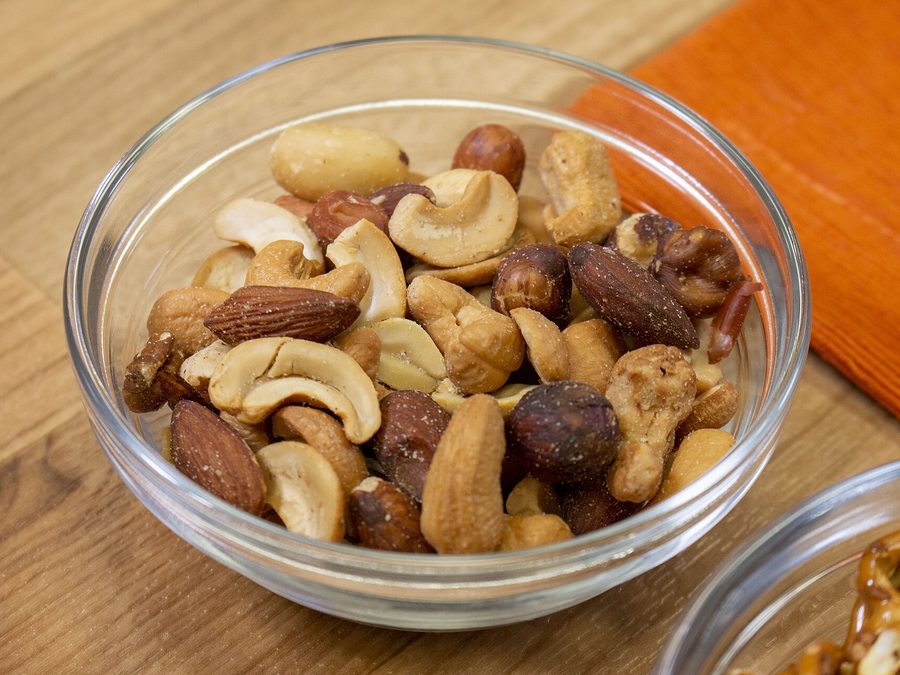
Whole nuts are among the most dangerous choking hazards for young children, and the guidance is to wait until around 4 or 5 years. Nut butters and ground nuts are a completely different matter and should start early.
When can babies have whole nuts?
Whole nuts from around 4 to 5 years. Smooth nut butters, thinned, and finely ground nuts from around 6 months — and those should not be delayed, because early introduction reduces the risk of nut allergy.
How do you serve whole nuts to a baby?
The shape is what makes a food safe, and it changes as your baby’s grip and chewing change. Find your baby’s age band.
-
6–8 months
Not as whole nuts. Smooth nut butter thinned to a pourable consistency, or finely ground nut stirred into food. See the individual nut butter entries.
-
24 months+
Whole nuts from around 4 to 5 years, supervised, seated, not while moving.
Prep tip
Ground almond and ground walnut do everything a whole nut does nutritionally and work as a grip coating for slippery fruit. There is no reason to wait on those.
Storage
Nuts and ground nuts go rancid — store them cold.
Is whole nuts a choking hazard for babies?
Whole and chopped nuts are hard, irregular and exactly the wrong size, and they do not soften with saliva. They are consistently near the top of choking-fatality data for children. The NHS advises against whole nuts under 5 years; US guidance commonly says 4. Chopped nuts are only marginally better and are best avoided too.
Whatever you serve, stay within arm’s reach, keep your baby upright in a supportive seat, and never let them eat in a moving car, buggy or carrier. Gagging is loud and normal. Choking is silent.
Is whole nuts a common allergen?
Tree nuts are one of the nine common allergens, and the important point is that the choking rule and the allergy rule pull in opposite directions on form but the same direction on timing. Introduce nut protein early, from around 6 months, as thinned butter or ground nut. Delay only the whole-nut shape.
Is whole nuts healthy for babies?
Nuts are nutritionally excellent, which is precisely why the form matters so much. Everything a whole nut offers — protein, unsaturated fat, vitamin E, magnesium — is available from thinned nut butter or ground nut, with none of the risk. Delaying the nut protein is a real cost; delaying the whole nut is not.
| Healthy fats | Very high |
|---|---|
| Protein | High |
| Vitamin E | High |
| Magnesium | High |
| Iron per serving | ~0.8 mg |
Common questions about whole nuts
So do I introduce nuts early or not?
Early, as thinned butter or ground nut — that is what reduces allergy risk. Late, as whole nuts — that is what avoids choking. Both are true at once and they are not in conflict.
What age can children eat whole nuts?
Around 4 years in US guidance, 5 years in NHS guidance. Even then, seated and supervised.
Reference material
Guidance on this page follows the sources listed below.
Foods parents look at next

Nuts & seeds
Almond butter
A tree-nut introduction that also happens to be a decent calcium source.

Nuts & seeds
Peanut butter
Early, regular peanut is the single best-evidenced way to reduce the risk of peanut allergy.
Nuts & seeds
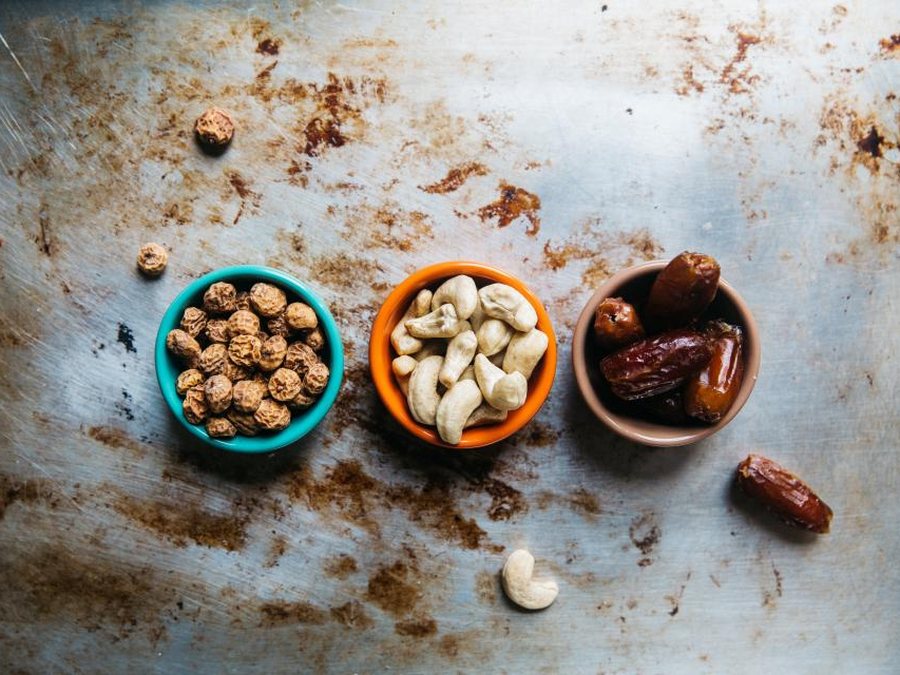
Cashew butter
Mild and creamy — and one of the tree nuts most likely to cause a reaction.

Wait a while
Popcorn
One of the highest-risk foods for young children. Not before 4 years.